

Active Components And Passive Components

by Suntop
2025-12-12
Active components and passive components are the building blocks of electronic circuits. They play distinct roles in the functionality of devices. Understanding these components is crucial for anyone interested in electronics.
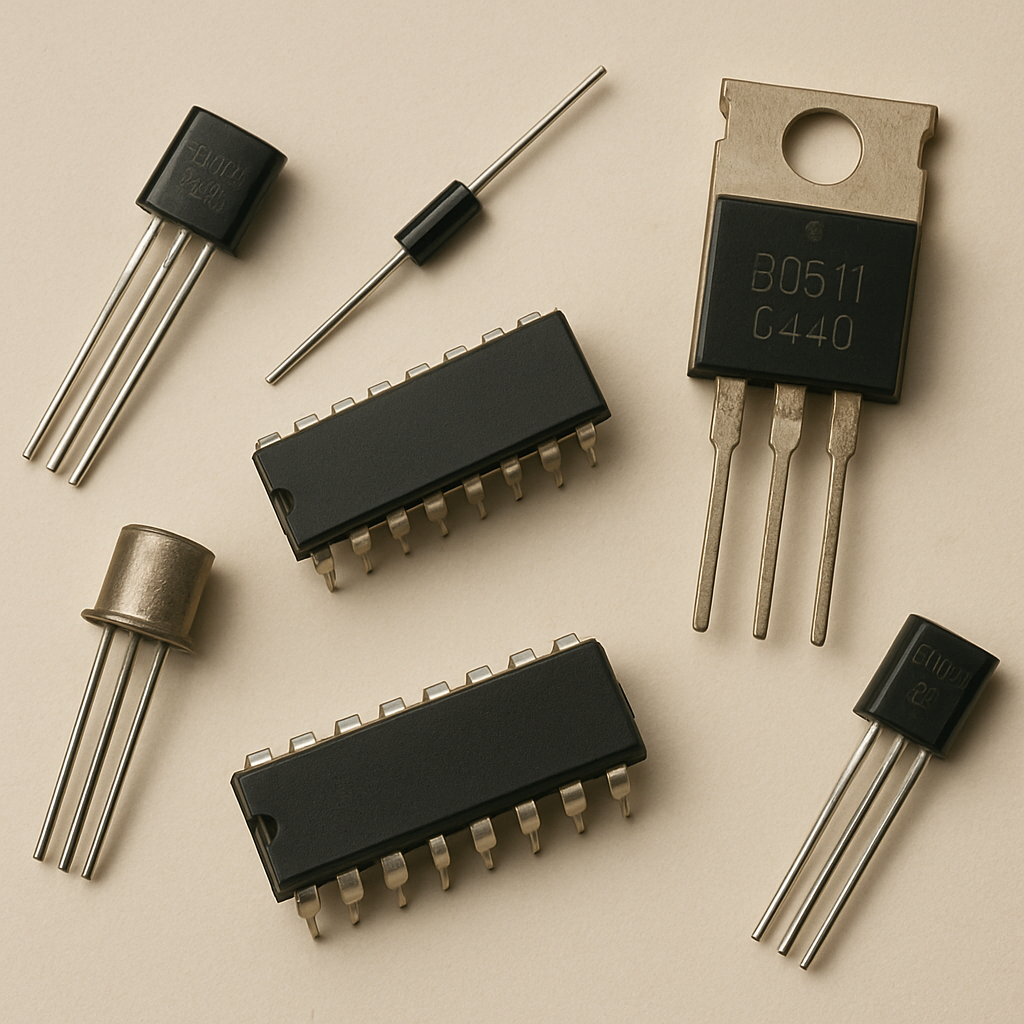
Active components require an external power source to function. They can amplify signals and control current flow. Examples include transistors and integrated circuits.
Passive components, on the other hand, do not need an external power source. They are used for energy storage and filtering. Resistors and capacitors are common examples.
Both active and passive components are essential for creating functional electronic systems. They work together to ensure devices operate efficiently and reliably. Understanding their differences helps in designing effective circuits.
What are Active Components?
Active components are integral parts of electronic circuits. These components require external power to operate effectively. They can amplify, control, and manipulate electrical signals.
Key characteristics distinguish active components from passive ones. They include their ability to introduce gain and require an external power source. These components actively influence the flow of electricity in circuits.
Common examples of active components include:
- Transistors
- Diodes
- Integrated circuits
Active components are versatile. They can switch electronic signals on and off. They are also used in signal modulation and processing.
Transistors, for instance, are used in amplifiers to increase signal strength. Diodes direct the flow of current in one direction, preventing backflow.
Integrated circuits combine multiple active components. They perform complex functions in a compact form. They are found in devices like computers and smartphones.
Understanding active components is crucial for anyone designing electronic circuits. These components enable advanced functionalities and innovations in electronic devices.
What are Passive Components?
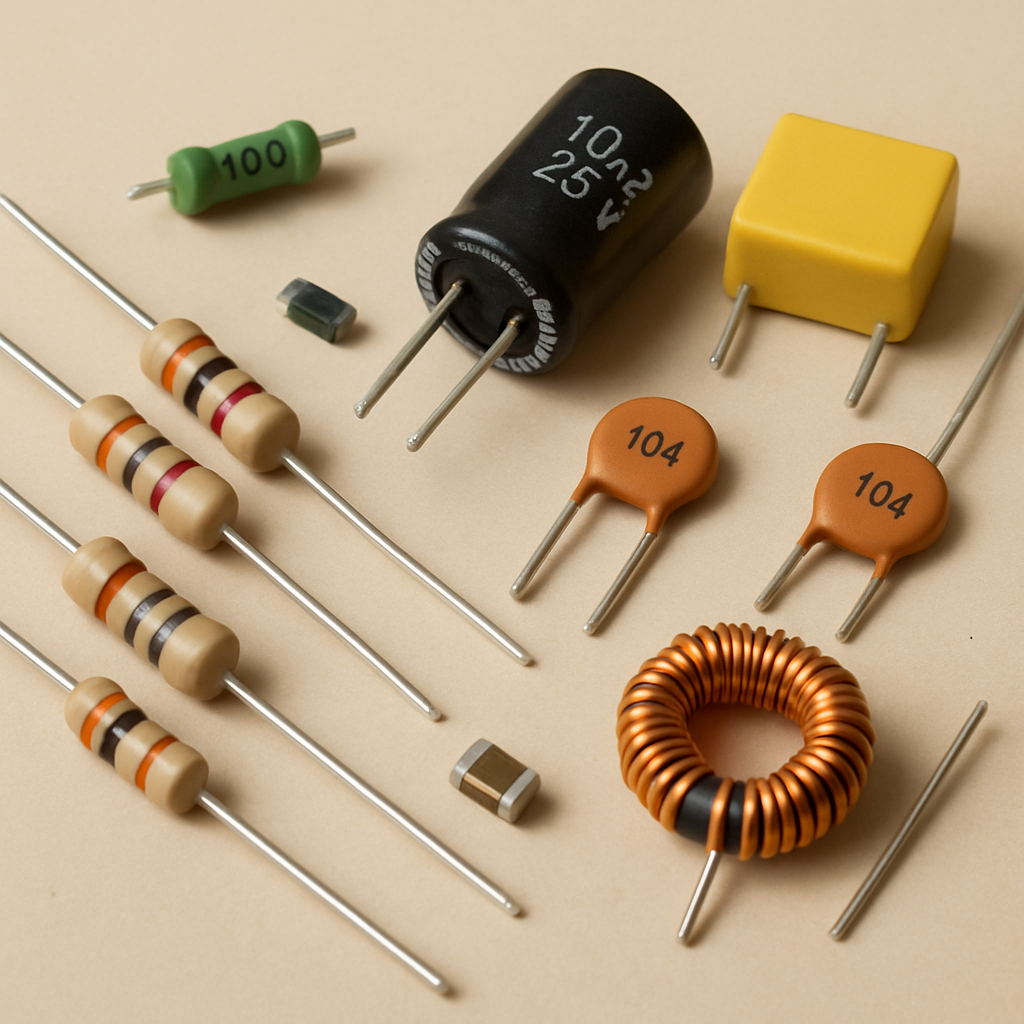
Passive components play a crucial role in electronic circuits. Unlike active components, they don’t need an external power source. Instead, they rely on the energy present in the circuit.
These components have no gain and cannot amplify signals. They manage energy by storing, filtering, or decoupling it. They are often simpler and more reliable due to fewer moving parts.
Examples of passive components include:
- Resistors
- Capacitors
- Inductors
Resistors control the flow of current, reducing its magnitude as needed. Capacitors store electrical energy temporarily and can filter signals. Inductors store energy in a magnetic field when current passes through.
In a circuit, passive components work to stabilize voltage levels. They contribute to the creation of filters and resonant circuits. These functionalities are vital for ensuring the smooth operation of electronic devices.
Passive components often find use in power supplies. They help in regulating the output and smoothing voltage fluctuations. Additionally, they play an essential role in RF and communication systems.
Understanding these components aids in designing efficient and reliable electronic systems. They complement active components, making them indispensable in circuit design.
Key Differences: Active vs Passive Components
Active and passive components are fundamental in electronics but serve different purposes. The primary distinction is in their need for external power sources.
Active components need external energy to function. They can amplify and modulate signals, allowing for more complex behaviors. Conversely, passive components operate using energy already in the circuit. They manage and distribute this energy without amplification.
Key Differences Include:
- Power Requirement: Active components need power; passive components do not.
- Signal Amplification: Only active components amplify signals.
- Complexity: Active components are typically more complex.
These distinctions impact how each component is used in circuits. Active components often control operations, while passive components support and maintain circuit integrity.
The combined use of both component types enriches electronic design. It enables the creation of diverse and functional electronic systems.
Common Active Components in Electronics
Active components are crucial in modern electronics. They play significant roles in processing and modifying electronic signals. These components rely on an external power source to operate effectively.
Examples of Active Components:
Transistors: Essential for amplification and switching.
- They manage current flow in a circuit.
- Diodes: Allow current to flow in one direction. They are vital for rectification processes.
- Integrated Circuits (ICs): Complex components used in various applications, from timers to computers.
Transistors are the backbone of digital electronics. They enable logic operations, making them indispensable in computing and digital processing.
Diodes are simple yet powerful components. They protect circuits by preventing reverse current flow. They are also used in converting alternating current (AC) to direct current (DC).
Integrated circuits combine many components into a single chip. They can include microprocessors, memory chips, and custom processors. Their versatility and complexity allow for advanced functionalities.
Active components drive innovations in consumer electronics. They enable smartphones, computers, and many other devices to perform efficiently and complex tasks.
Common Passive Components in Electronics
Passive components are foundational in electronics. They perform essential tasks without needing an external power source. These elements are crucial for stabilizing and filtering electronic signals.
Types of Passive Components:
- Resistors: Limit current flow. They are fundamental in controlling voltage and current levels.
- Capacitors: Store and release electrical energy. They smooth out voltage fluctuations.
- Inductors: Store energy in a magnetic field. They are used in tuning circuits and filters.
Resistors are ubiquitous in circuits. They help in setting electrical properties like voltage levels and current flow, ensuring circuit stability.
Capacitors perform various functions. They can act as filters, blocking DC while allowing AC to pass, thereby ensuring signal integrity in communication systems.
Inductors are less common but vital for specific applications. They are integral to inductive filters and in managing the phase of signals.
These components are generally more reliable than active ones. They have long lifespans and are less prone to failure, making them suitable for long-term applications.
Passive elements are indispensable for numerous applications. Their reliability and simplicity enable them to effectively support active components in complex circuits.
Roles and Functions in Electronic Circuits
Electronic circuits rely on both active and passive components to function effectively. Each type of component plays unique roles that ensure efficient circuit operation.
Active components are primarily responsible for signal amplification. They control current flow and are vital in applications requiring gain.
Passive components, on the other hand, are crucial for energy storage and signal filtering. They help in maintaining circuit stability and ensuring signal clarity.
Key Functions:
- Active Components:
- Amplify signals
- Modulate currents
- Control voltage
- Passive Components:
- Store energy
- Filter signals
- Impedance matching
Together, these components form the backbone of electronic design. They complement each other, working together to create dynamic, functional circuits that perform complex operations efficiently.
Applications: Where Are Active and Passive Components Used?
Electronic components, both active and passive, are utilized in diverse applications across various industries. Their roles differ, yet both are critical for a wide range of functions.
Active components are central in signal processing applications. They are used in amplifiers, oscillators, and switching applications. For instance, your smartphone relies heavily on active components to process data and manage power.
Passive components, however, shine in settings involving power management and signal filtering. They can be found in power supplies and radio frequency applications. Wireless communication systems often use passive components for tuning and filtering signals.
Practical Applications:
- Active Components:
- Data processing in computers
- Power management in mobile devices
- Signal amplification in audio equipment
- Passive Components:
- Energy storage in power supplies
- Signal tuning in radios
- Circuit stabilization in televisions
These components are the unsung heroes of modern technology, enabling everything from simple radios to advanced communication systems.
Simple Example: Passive Components in Wireless Communication
Passive components play a vital role in wireless communication systems. They help fine-tune frequencies and ensure efficient signal processing. For example, filters made from capacitors and inductors can block unwanted signals while allowing useful signals to pass through.
Such components maintain signal quality, crucial for clear wireless communication. By managing frequency and signal strength, passive components enhance performance.
Key Uses in Wireless Systems:
- Signal filtering
- Frequency tuning
- Impedance matching
In wireless setups, these components ensure a smooth and reliable communication process.
Active and Passive Devices: Working Together in Circuits
Active and passive devices perform distinct roles in circuits, but they work together seamlessly. Active devices, like transistors, control current flow and amplify signals. Without these devices, many complex electronic functions would be impossible.
In contrast, passive devices such as resistors and capacitors maintain balance by managing current flow and energy storage. They support the functionality of active components.
Combined Roles in Circuits:
- Amplifying signals
- Managing energy flow
- Stabilizing voltages
This synergy forms the backbone of functional electronic circuits, making both types of components essential for successful circuit design.
Frequently Asked Questions
- What are active components? Active components are circuit elements like transistors and diodes. They require external power to function and can amplify signals.
- What are passive components? Passive components include resistors and capacitors. They do not need external power and cannot amplify signals.
Common Questions:
- Can passive components regulate voltage? Yes, they can stabilize and smooth out voltage fluctuations.
- Are active components expensive? Typically, active components are costlier due to their complexity.
- Which components have longer lifespans? Passive components usually have a longer lifespan and are more reliable.
Conclusion
Active components and passive components form the backbone of modern electronics. Understanding their functions and distinctions is crucial for circuit design.
These components, both active and passive, work in harmony to power and refine our electronic devices. Their collaboration is fundamental in creating efficient and effective electronic systems.
SUNTOP
Founded in 2000, Suntop is one of the leading global distributors of electronic components, dedica ted to providing comprehensive procurement and supply chain services to the global electronics manufacturing industry. Our services include distribution, spot trading, PPV cost-saving projects, and inventory management. We not only offer high-quality products but also strive to assist our clients in achieving optimal solutions with minimal time and cost.
Suntop is a popular choice for those seeking electron devices and circuits due to their competitive pricing and reliable service. They cater to both small-scale hobbyists and large-scale manufacturers, ensuring that every customer finds what they need.

SHARE: