

Solid State Switches vs Mechanical Switches

by Suntop
2026-01-15
Solid state switches and mechanical switches are essential in electronics. They control electrical circuits in different ways. Understanding their differences is crucial for engineers and electronics enthusiasts.
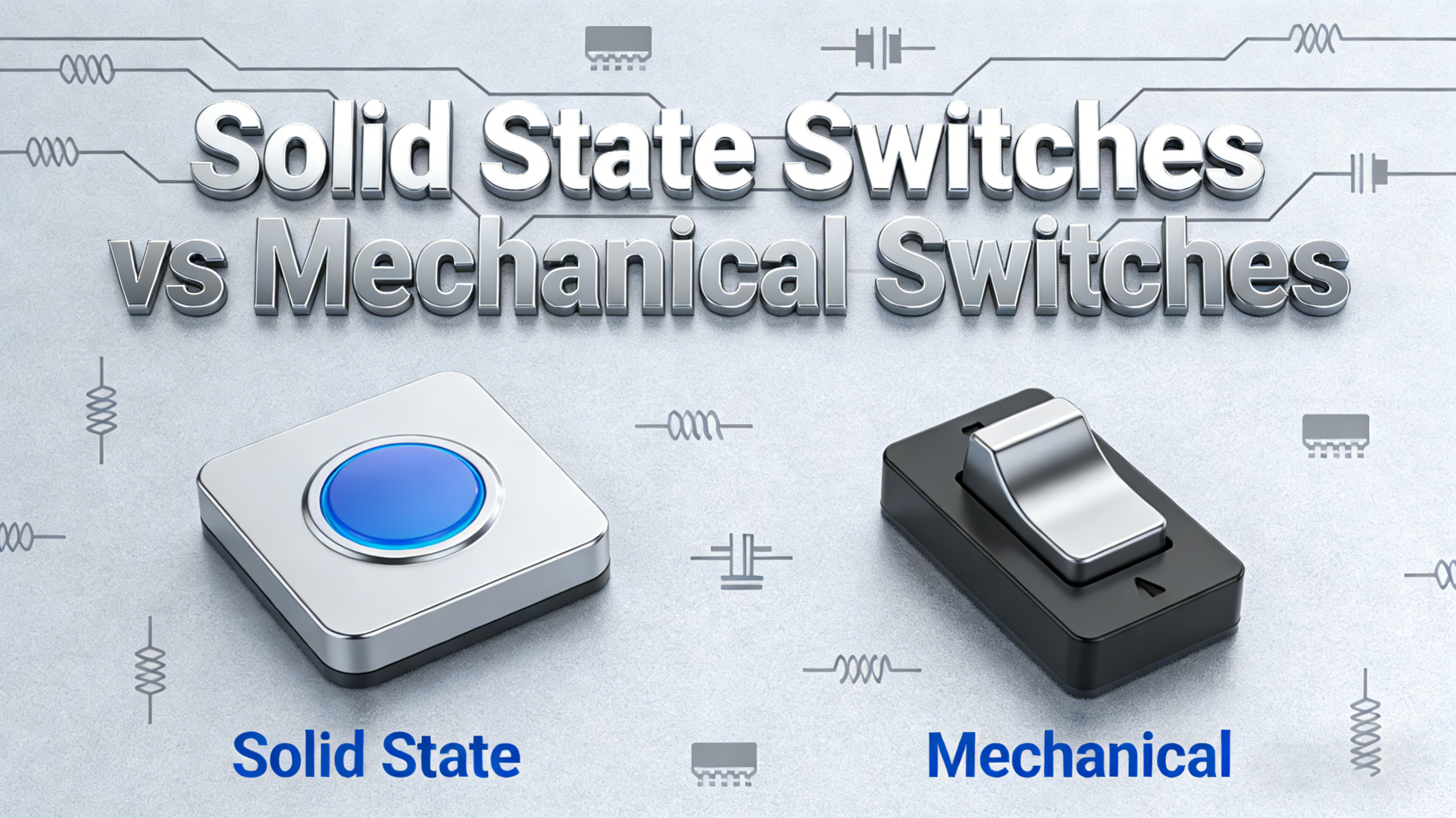
Solid state switches use semiconductor devices. They offer durability and fast switching speeds. Mechanical switches, on the other hand, rely on physical contacts. They provide tactile feedback and are often more cost-effective.
Each type of switch has its own advantages and limitations. Solid state switches excel in high-speed and high-reliability applications. Mechanical switches are preferred for their simplicity and tactile feel.
Choosing the right switch depends on the specific needs of your application. This article will explore the key differences, advantages, and applications of both types.
What Are Solid State Switches?
Solid state switches are electronic devices that manage electric power flow without moving parts. These switches use semiconductors, like diodes and transistors, to perform their function. This technology ensures fewer mechanical failures over time.
The lack of moving parts results in durability and longevity. Solid state devices are reliable, especially in environments needing low maintenance and high reliability. They can handle high frequencies, making them suitable for high-speed applications.
Solid state switches come in a variety of forms, including:
- Transistors
- Silicon-controlled rectifiers (SCRs)
- Triacs
Additionally, these switches are resistant to shock and vibration. They are also capable of remote operation, providing flexibility in system designs. Solid state switches are often used in applications such as motor control, lighting systems, and industrial automation. Their ability to minimize noise makes them ideal for environments sensitive to sound.
What Are Mechanical Switches?
Mechanical switches are fundamental to many electronic systems, utilizing physical contacts to open or close circuits. When actuated, these switches create or disrupt an electrical connection, allowing current to flow or be halted.
The tactile feedback provided by mechanical switches is one of their distinguishing features. Users often prefer them for applications where physical contact gives a sense of control. However, this reliance on physical components can lead to wear over time.
Common types of mechanical switches include:
- Toggle switches
- Push-button switches
- Slide switches
Despite the potential for contact wear, mechanical switches are valued for their simplicity and cost-effectiveness, especially in low-volume applications. Their straightforward design allows for easier troubleshooting and repair. Consequently, they are prevalent in consumer electronics, automotive applications, and household appliances where ease of use and low cost are priorities.
Key Differences Between Solid State and Mechanical Switches
Solid state switches and mechanical switches serve similar purposes but differ in operation and design. Solid state switches use semiconductor devices, while mechanical switches rely on physical contacts for switch control.
The absence of moving parts in solid state devices leads to enhanced durability and a longer lifespan. In contrast, the mechanical components of traditional switches can wear out over time, shortening their operational life.
Solid state switches are known for their rapid switching speeds, suitable for high-speed applications. Conversely, mechanical switches might lag due to the necessity for physical movement, affecting response time.
A few key differences between these two types of switches include:
- Durability: Solid state switches win with no mechanical wear.
- Speed: Solid state switches offer faster operation.
- Noise: Solid state switches operate silently; mechanical switches may create noise.
Furthermore, solid state switches excel in environments with high shock and vibration levels, thanks to their resilience. Mechanical switches, however, are sometimes preferred for applications needing tactile feedback. Understanding these differences helps in choosing the right technology for specific applications and environments.
Advantages of Solid State Switches
Solid state switches bring several notable benefits, thanks to their unique design. They eliminate moving parts, resulting in a durable solution that outlasts mechanical alternatives. This durability minimizes downtime and maintenance costs over time.
Another significant advantage is their speed. Solid state switches excel in rapid switch control, handling high frequencies and enabling precise operations. This makes them ideal for applications requiring quick response and high-speed functionality.
Energy efficiency is also a key benefit, as these switches often reduce power consumption. Their design minimizes energy loss, contributing to more efficient power distribution within electronic systems.
Additional advantages of solid state switches include:
- Silent Operation: Perfect for noise-sensitive applications.
- Compact Design: Supports miniaturization in modern electronics.
- Shock and Vibration Resistance: Ideal for harsh environments.
Their ability to withstand severe conditions makes them suitable for industrial settings. Plus, their silent operation ensures no noise pollution, an essential feature in environments where quiet is crucial. These attributes enhance solid state switches’ appeal in diverse sectors.
Advantages of Mechanical Switches
Mechanical switches have long been favored for their simplicity and reliability. Their straightforward design makes them easy to understand and quick to troubleshoot. This is invaluable in settings where immediate solutions are necessary.
These switches provide tactile feedback, offering users a physical sensation that verifies actuation. This feedback is especially beneficial in applications where user interaction is essential.
In terms of cost, mechanical switches usually present a more economical option for low-volume or less complex projects. Their affordability can be a deciding factor for many users and applications where budget is a primary concern.
Additional benefits of mechanical switches include:
- Customizability: Easily adapted to specific needs.
- Ease of Repair: Simple design allows for quick fixes.
- Versatility: Effective across many industries.
By providing tactile feedback, mechanical switches create a satisfying user experience. Their inherent versatility ensures broad applicability in a wide range of environments, from household to industrial settings.
Disadvantages and Limitations
Both solid state and mechanical switches come with their own set of limitations. Understanding these can significantly impact the decision-making process for specific applications.
Solid state switches, while reliable, often come with a higher initial cost. The complex technology utilized in these switches can lead to increased expenses, especially for small-scale operations.
Mechanical switches, however, can suffer from mechanical wear and tear due to their moving parts. This wear can lead to a shorter lifespan and more frequent maintenance needs.
There are particular limitations one should consider:
Solid State Switches:
- Higher cost.
- Complex technology.
Mechanical Switches:
- Susceptible to wear.
- Generates electrical noise.
Moreover, solid state switches may be prone to more heat generation which could necessitate additional cooling mechanisms. Mechanical switches, on the other hand, are more susceptible to environmental factors such as dust and moisture, which can impede their function.
Applications of Solid State Switches
Solid state switches are versatile and find numerous applications across various industries. Their reliability and low maintenance make them a favorite in critical systems where downtime is not an option.
In industrial automation, they control machinery with precision, improving efficiency and safety. These switches also shine in telecommunications, where they’re essential for signal processing.
Some common applications include:
- Motor Control: Enhancing operation efficiency.
- Lighting Control: Offering energy savings.
- Industrial Automation: Streamlining production processes.
Additionally, they play a pivotal role in renewable energy sectors. By optimizing power distribution systems, they aid in reducing energy losses. Solid state switches contribute significantly to the advancement of power electronics, allowing smoother transitions and precise control in electronic circuits.
Applications of Mechanical Switches
Mechanical switches have been fundamental components in everyday devices and industrial setups. They excel in tasks where simplicity and tactile feedback are prioritized.
These switches are commonly used in household appliances, including toasters and blenders, providing straightforward on/off control. In automotive settings, they facilitate reliable manual operations, like in dashboards and steering controls.
Mechanical switches find roles in:
- Consumer Electronics: Simple and reliable designs.
- Automotive Applications: Durability under varied conditions.
- Household Appliances: Easy maintenance and use.
Furthermore, their cost-effectiveness makes them ideal for low-volume applications. In environments with heavy-duty requirements, mechanical switches offer robustness and longevity, enduring conditions that might challenge more sensitive electronic components. Their tactile feedback ensures a satisfying user experience, bridging the gap between humans and machines.
Solid State Relays: A Special Case
Solid state relays (SSRs) are a unique subset of solid state switches. They facilitate high power control without moving parts, offering reliability and durability in demanding applications.
Unlike mechanical relays, SSRs use semiconductor devices to switch loads. This results in silent operation and reduced electrical noise, making them suitable for noise-sensitive environments. SSRs excel in industrial automation and motor control due to their quick switching capabilities.
Key features of SSRs include:
- High Power Control: Handles hefty loads efficiently.
- No Mechanical Parts: Greater lifespan and reliability.
- Minimal Maintenance: Reduced wear and failure risks.
In essence, SSRs offer a compelling solution for industries requiring swift switch control and minimal maintenance. Their design allows for easy integration into complex electronic systems, enhancing both performance and longevity.
Choosing the Right Switch for Your Application
Selecting the correct switch requires understanding your specific needs. Consider the operating environment and the nature of your application. This ensures optimal performance and reliability.
For automated systems, solid state switches offer efficiency and low maintenance. Their ability to integrate into complex setups is invaluable. In contrast, mechanical switches are better suited for basic, cost-sensitive applications.
Here are points to consider when choosing:
- Environment: Dust, moisture, and temperature factors.
- Application Type: Manual control vs. automation.
- Budget Constraints: Initial costs and long-term expenses.
Understanding these criteria will guide you in finding the best solution for your electronic systems. Choosing wisely can significantly enhance operational efficiency and lifespan.
Conclusion
In conclusion, both solid state and mechanical switches have distinct advantages. Solid state switches are optimal for durable, efficient operations in complex systems. They offer speed and reliability, thriving in challenging environments.
On the other hand, mechanical switches provide a more tactile experience. They suit simple systems and are cost-effective for small-scale applications. Your choice should align with your specific needs and priorities. By understanding each switch’s unique characteristics, you can make informed decisions. This ensures the switch meets your performance and budget requirements effectively.
SUNTOP
Founded in 2000, Suntop is one of the leading global distributors of electronic components, dedica ted to providing comprehensive procurement and supply chain services to the global electronics manufacturing industry. Our services include distribution, spot trading, PPV cost-saving projects, and inventory management. We not only offer high-quality products but also strive to assist our clients in achieving optimal solutions with minimal time and cost.
Suntop is a popular choice for those seeking electron devices and circuits due to their competitive pricing and reliable service. They cater to both small-scale hobbyists and large-scale manufacturers, ensuring that every customer finds what they need.

SHARE: