

Is AI Just Like the Internet?
by Suntop
2025-08-26
The debate over whether Artificial Intelligence (AI) mirrors the Internet has gained momentum as both technologies reshape industries, daily life, and global connectivity.
At first glance, their transformative impact—from disrupting business models to changing how we communicate—seems parallel. However, a deeper dive reveals critical distinctions, especially when examining the role of underlying components like lot artificial intelligence, home again microchip, advanced power manager, and chip support library.
These components are not just afterthoughts; they are the backbone that differentiates how AI and the Internet function, scale, and deliver value. This article will unpack the parallels, differences, and real-world implications of AI versus the Internet, with a focus on how specialized components drive their unique capabilities.
The Fundamental Parallels Between AI and the Internet
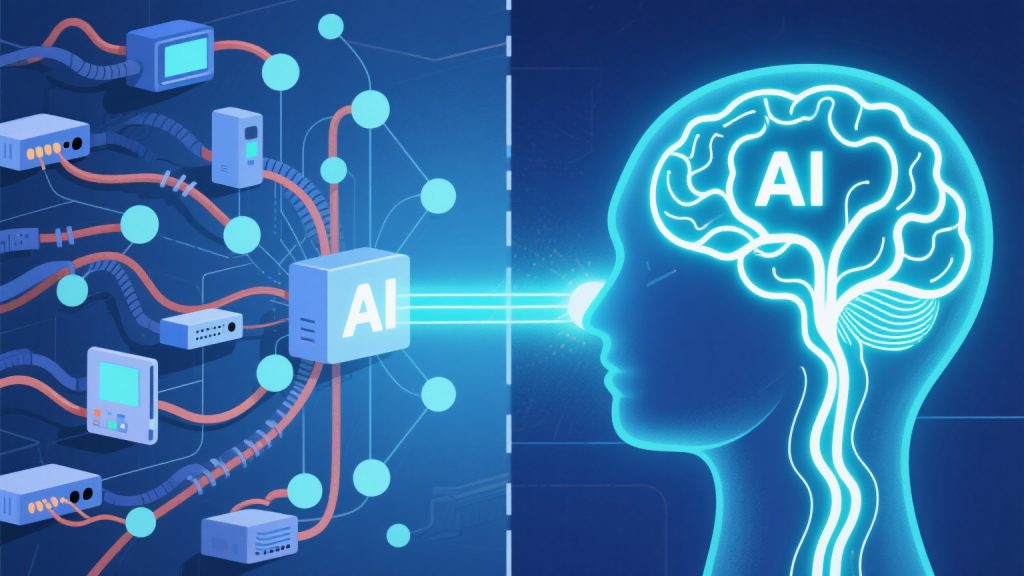
Before exploring differences, it’s essential to acknowledge why AI and the Internet are often compared. Both are general-purpose technologies (GPTs)—tools that spread across sectors, enable new innovations, and create ripple effects in economies. Here’s how they align, with components playing a hidden yet vital role:
Scalability Driven by Component Innovation
The Internet’s scalability—from connecting a few universities in the 1960s to billions of devices today—relies on standardized hardware like routers, servers, and microchips. Similarly, AI’s ability to scale from small chatbots to large language models (LLMs) depends on specialized components.
For example, lot artificial intelligence (IoT-integrated AI) systems, which power smart cities and industrial automation, require seamless connectivity—much like the Internet—but depend on home again microchip technology to enable device-to-device communication.
These microchips, designed for low-latency data transfer, ensure that AI algorithms in IoT devices (e.g., smart thermostats, factory sensors) can process data in real time, just as the Internet relies on routers to direct data packets.
Accessibility Through Component Optimization
The Internet became ubiquitous because hardware costs dropped and user-friendly devices (e.g., smartphones) emerged. AI is following a similar path, thanks in part to advanced power manager components. Traditional AI systems, like early supercomputers, were energy-hungry and limited to labs.
Today, advanced power manager technology reduces energy consumption in AI-enabled devices—from laptops running AI photo editors to edge devices in remote areas—making AI accessible to more users. This mirrors how the Internet’s growth was fueled by energy-efficient modems and processors that made home internet access affordable.
Ecosystem Building Around Core Tools
Both technologies thrive on ecosystems. The Internet’s ecosystem includes browsers, cloud services, and e-commerce platforms; AI’s ecosystem includes algorithms, datasets, and chip support library resources. A chip support library—a collection of software tools and drivers for microchips—ensures that AI hardware (e.g., GPUs, TPUs) works seamlessly with software.
For instance, NVIDIA’s CUDA platform (a type of chip support library) has been critical to AI’s growth, just as TCP/IP protocols (the Internet’s “rulebook”) enabled its ecosystem. Without chip support library solutions, AI hardware would be incompatible with most software, stalling innovation—much like how the Internet would fail without standardized protocols.
Key Differences Between AI and the Internet (And Their Component Drivers)
While AI and the Internet share similarities, their core purposes, dependencies, and impacts differ significantly—often due to the components that power them. Below are the most critical distinctions:
- Purpose: Connectivity vs. Intelligence:
- The Internet’s primary goal is connectivity: it links devices, people, and data across the globe. AI’s primary goal is intelligence: it mimics human decision-making by processing data, identifying patterns, and making predictions. This difference is reflected in their components. For example, the Internet relies on microchips designed for data transfer (e.g., Ethernet chips), while AI depends on lot artificial intelligence components that combine connectivity with data processing. A lot artificial intelligence system in a smart farm, for instance, uses sensors (connected via the Internet) to collect soil moisture data, then uses AI algorithms (powered by specialized chips) to decide when to water crops. The Internet enables the data flow; AI enables the decision—with home again microchip technology ensuring the sensors and AI processor communicate without lag.
- Dependence on Data vs. Infrastructure:
- The Internet is infrastructure-dependent: it needs physical cables, satellites, and routers to function. AI is data-dependent: it needs large, high-quality datasets to learn and improve. However, AI’s data dependence is only possible with components that handle data efficiently. Advanced power manager technology, for example, allows AI data centers to process petabytes of data without overheating or wasting energy. A single AI data center can use as much energy as a small city, but advanced power manager components—like dynamic voltage scaling tools—reduce energy use by 30-40%, making large-scale data processing feasible. In contrast, the Internet’s infrastructure relies more on durable cables and routers than on energy management components, as its core function (data transfer) is less energy-intensive.
- Proactive vs. Reactive Functionality:
- The Internet is largely reactive: it responds to user requests (e.g., opening a webpage, sending an email) by routing data. AI is proactive: it anticipates needs (e.g., a recommendation engine suggesting a movie, a predictive maintenance system alerting to equipment failure). This proactivity is enabled by chip support library solutions. A chip support library provides AI hardware with pre-built algorithms for tasks like image recognition or natural language processing, allowing devices to act proactively without constant human input. For example, a smart security camera uses a chip support library to run AI facial recognition software—proactively alerting users to unfamiliar faces—while the Internet simply sends the alert to the user’s phone. The Internet facilitates the alert; AI drives the proactive decision.
Practical Applications: How Components Bridge AI and the Internet
To understand the relationship between AI, the Internet, and components, it’s critical to examine real-world use cases. These applications show how lot artificial intelligence, home again microchip, advanced power manager, and chip support library work together to leverage the strengths of both technologies.
Smart Homes: The Intersection of Connectivity and Intelligence
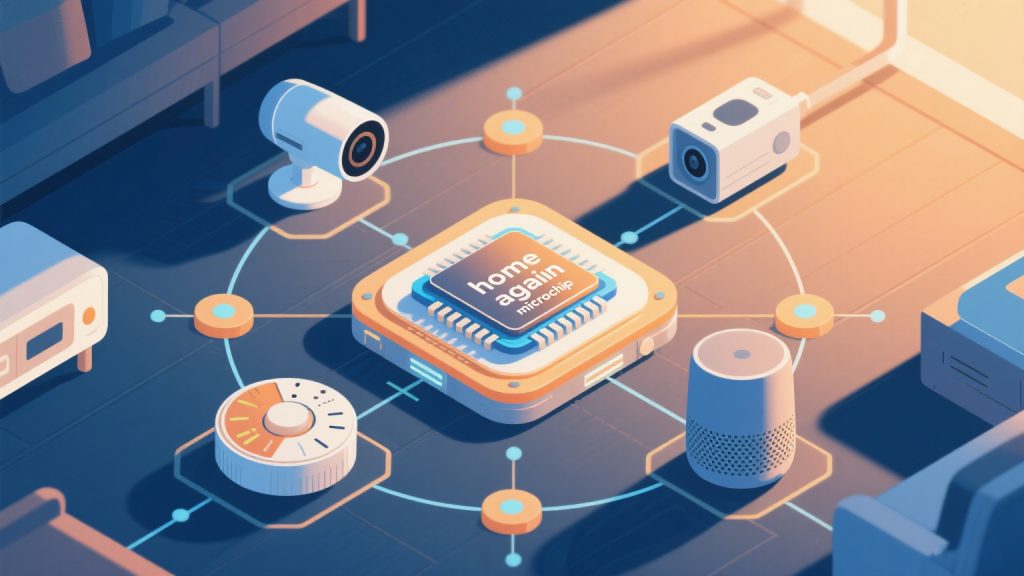
Smart homes are a perfect example of AI and the Internet converging, with components at the center. typical smart home uses the Internet to connect devices (e.g., lights, thermostats, security cameras) and AI to automate tasks. Here’s how components play a role:
- Lot artificial intelligence: Integrates IoT devices with AI. For example, a smart thermostat uses IoT sensors (connected via the Internet) to track occupancy and temperature, then uses AI to adjust settings for energy efficiency. Without lot artificial intelligence, the thermostat would just collect data—not act on it.
- Home again microchip: Ensures devices communicate seamlessly. If a smart light and a motion sensor are from different brands, a home again microchip (with universal compatibility) allows them to “talk”—so the light turns on when motion is detected. This is critical for the Internet of Things (IoT), as the Internet alone can’t solve compatibility issues.
- Advanced power manager: Reduces energy waste. Smart home devices run 24/7, but advanced power manager components adjust their energy use (e.g., dimming lights when no one is home, putting sensors in low-power mode) to cut electricity bills by up to 25%.
- Chip support library: Enables AI features. A smart speaker like Amazon Echo uses a chip support library to run its AI voice recognition software. The library ensures the speaker’s microchip can process voice commands quickly—even without a constant Internet connection (for basic tasks like setting timers).
Industrial IoT (IIoT): AI-Driven Efficiency, Internet-Enabled Connectivity
In manufacturing, IIoT systems use the Internet to connect machines and AI to optimize production—with components as the enablers. For example, a car factory might use:
- Lot artificial intelligence: AI algorithms analyze data from IoT sensors on assembly lines (e.g., vibration, temperature) to predict when a machine will fail. This prevents costly downtime—something the Internet alone (which only collects data) can’t do.
- Home again microchip: Connects legacy machines (e.g., old lathes) to the IIoT network. Many factories have machines built before IoT existed, but home again microchip retrofits let these machines send data to AI systems via the Internet.
- Advanced power manager: Powers AI edge devices. Edge computing—processing data locally (on the factory floor) instead of in the cloud—reduces latency for time-sensitive tasks (e.g., stopping a machine if a defect is detected). Advanced power manager components keep these edge devices running reliably, even in harsh factory conditions.
- Chip support library: Ensures AI and IoT hardware work together. A factory’s AI controller uses a chip support library to communicate with IoT sensors and actuators. Without the library, the controller couldn’t interpret sensor data or send commands to machines—rendering the IIoT system useless.
Advantages of Integrating AI, the Internet, and Specialized Components
Combining AI, the Internet, and components like lot artificial intelligence, home again microchip, advanced power manager, and chip support library offers unique advantages that neither technology could deliver alone. These benefits span efficiency, cost savings, and innovation:
Enhanced Efficiency Through Real-Time Decision-Making
The Internet provides real-time data; AI turns that data into action; components make it fast. For example, in healthcare, a remote patient monitoring system uses the Internet to send vital signs (e.g., heart rate, blood pressure) from a wearable device to a cloud server.
AI algorithms analyze the data to detect anomalies (e.g., an irregular heartbeat), and lot artificial intelligence components ensure the AI can send an alert to a doctor within seconds. Home again microchip technology ensures the wearable and server communicate without delays, while advanced power manager keeps the wearable running for days on a single charge.
This combination reduces response times for emergencies—something the Internet (which only sends data) or AI (which only processes data) couldn’t achieve alone.
Cost Savings Through Component Optimization
Components like advanced power manager and chip support library lower the total cost of ownership for AI and Internet systems. For example:
- Advanced power manager: AI data centers are expensive to run, but advanced power manager components cut energy costs by optimizing voltage and cooling. A 2024 study by the U.S. Department of Energy found that data centers using advanced power manager technology saved an average of $2.3 million annually in energy bills.
- Chip support library: Reduces development time for AI applications. Instead of building AI software from scratch, developers can use pre-built tools in a chip support library—cutting development costs by up to 40%. For small businesses, this makes AI accessible, just as the Internet made e-commerce accessible to small retailers.
Innovation Through Ecosystem Compatibility
Home again microchip and chip support library solutions enable compatibility between different brands and technologies, fostering innovation. For example, the rise of smart cities depends on different systems (traffic lights, public transit, waste management) working together.
home again microchip in traffic lights allows them to connect to a city’s AI traffic management system (via the Internet), while a chip support library ensures the AI can interpret data from traffic cameras and adjust signal timings. Without this compatibility, smart cities would be fragmented—with each system working in a silo, much like early Internet services (e.g., AOL, CompuServe) that couldn’t connect to each other.
Common Challenges and How Component Solutions Address Them
While integrating AI, the Internet, and components offers significant benefits, it also presents challenges. Below are the most common issues and how lot artificial intelligence, home again microchip, advanced power manager, and chip support library provide solutions:
Challenge: Latency in AI-Internet Systems
Latency—delays in data transfer—undermines AI’s effectiveness, especially for real-time tasks (e.g., autonomous driving, remote surgery). The Internet can introduce latency when data travels to the cloud, and AI algorithms need fast data to make decisions.
Solution: Lot artificial intelligence and home again microchip technology. Lot artificial intelligence moves AI processing to the “edge” (local devices) instead of the cloud, reducing reliance on Internet speed. For example, an autonomous car uses edge AI to process sensor data (e.g., stop signs, pedestrians) locally, with home again microchip components ensuring the car’s sensors, AI processor, and Internet-connected navigation system communicate in real time. This cuts latency from milliseconds to microseconds—critical for avoiding accidents.
Challenge: Energy Inefficiency in AI Systems
AI is energy-intensive: training a single LLM (like GPT-4) can use as much energy as 300 households in a year. The Internet also uses energy, but AI’s demands are far higher—threatening sustainability goals.
Solution: Advanced power manager components. These tools optimize energy use by adjusting voltage, clock speed, and cooling based on AI workloads. For example, a data center running AI training can use advanced power manager technology to reduce energy consumption during low-demand hours (e.g., nighttime) by 50%. Some advanced power manager solutions also use renewable energy integration—ensuring AI systems run on solar or wind power when available.
Challenge: Compatibility Between AI and Internet Hardware
AI hardware (e.g., GPUs, TPUs) and Internet hardware (e.g., routers, modems) are often designed by different manufacturers, leading to compatibility issues. Without seamless communication, AI can’t access Internet data, and the Internet can’t deliver AI-driven insights.
Solution: Chip support library and home again microchip technology. A chip support library provides a common “language” for AI and Internet hardware—ensuring a GPU can process data from a router, for example. Home again microchip components are built with universal compatibility in mind: they work with all major AI chips and Internet protocols, eliminating the need for custom adapters. For example, a home again microchip in a smart fridge allows it to connect to both an AI food inventory app (via Wi-Fi) and a Bluetooth-enabled grocery list tool—without compatibility errors.
Future Trends: How AI, the Internet, and Components Will Evolve Together
The relationship between AI and the Internet is evolving rapidly, with components driving the next wave of innovation. Below are the key trends to watch:
Edge AI + 5G: Faster, More Efficient Systems
5G—the next generation of Internet connectivity—offers faster speeds and lower latency than 4G. When combined with edge AI (powered by lot artificial intelligence), this will enable new applications like remote surgery and autonomous drones.
Advanced power manager components will be critical here: 5G devices use more energy, but advanced power manager technology will reduce battery drain, making edge AI devices (e.g., 5G-enabled smart glasses) practical for all-day use. Chip support library solutions will also adapt to 5G, ensuring AI hardware can process the larger volumes of data 5G delivers.
AI-Enabled Internet Infrastructure
The Internet’s infrastructure (e.g., cables, satellites) is aging, but AI—powered by home again microchip technology—will make it smarter. For example, AI algorithms (running on home again microchip-equipped routers) will predict and fix Internet outages before they happen.
router with a home again microchip can detect unusual traffic patterns (e.g., a sudden drop in speed) and reroute data to avoid downtime—all without human intervention. This will make the Internet more reliable, just as AI has made power grids more resilient.
Sustainable AI-Internet Ecosystems
As concerns about climate change grow, the focus will shift to making AI and the Internet more sustainable. Advanced power manager components will play a leading role: future versions will use AI to learn usage patterns and optimize energy use in real time. For example, a advanced power manager in a data center will use AI to predict when demand will spike (e.g., during a viral social media event) and adjust energy use accordingly.
Lot artificial intelligence will also contribute: edge AI reduces the need for data centers (which are major energy users), and chip support library solutions will include tools to measure and reduce the carbon footprint of AI applications.
Conclusion
So, is AI just like the Internet? The answer is no—but it’s closely linked, with components acting as the bridge. The Internet is a connectivity layer; AI is an intelligence layer. Together, they create a system that is more than the sum of its parts—but only if supported by the right components : lot artificial intelligence for IoT-AI integration, home again microchip for compatibility, advanced power manager for efficiency, and chip support library for seamless hardware-software communication.
As we look to the future, the line between AI and the Internet will blur further. Edge AI will make the Internet smarter, 5G will make AI faster, and sustainable components will make both greener. For businesses and consumers alike, understanding this relationship—and the role of specialized components—will be key to unlocking the full potential of both technologies. Whether you’re building a smart home, optimizing a factory, or developing the next AI app, the right components will turn the question of “Is AI just like the Internet?” into “How can AI and the Internet work together—for me?”
SHARE: