


2n3904 transistor

by Suntop
2025-08-28
he 2n3904 transistor is a staple in the world of electronics. Known for its versatility, it is a favorite among hobbyists and professionals alike. This NPN bipolar junction transistor (BJT) is widely used in low-power switching and amplification applications.
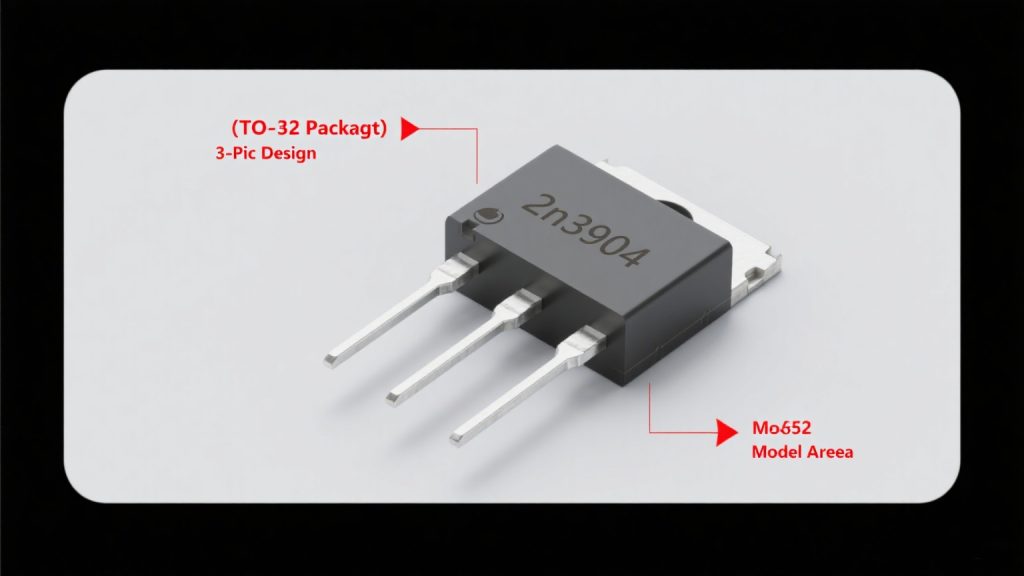
Its compact size and high-speed switching capabilities make it ideal for various projects. From audio amplifiers to radio frequency circuits, the 2n3904 is a reliable choice. It is housed in a TO-92 package, which is common in many electronic components.
Understanding the 2n3904’s pin configuration and specifications is crucial for effective use. This guide will explore its features, applications, and sourcing options. Dive into the world of the 2n3904 transistor and discover its potential.
What is the 2n3904 Transistor?
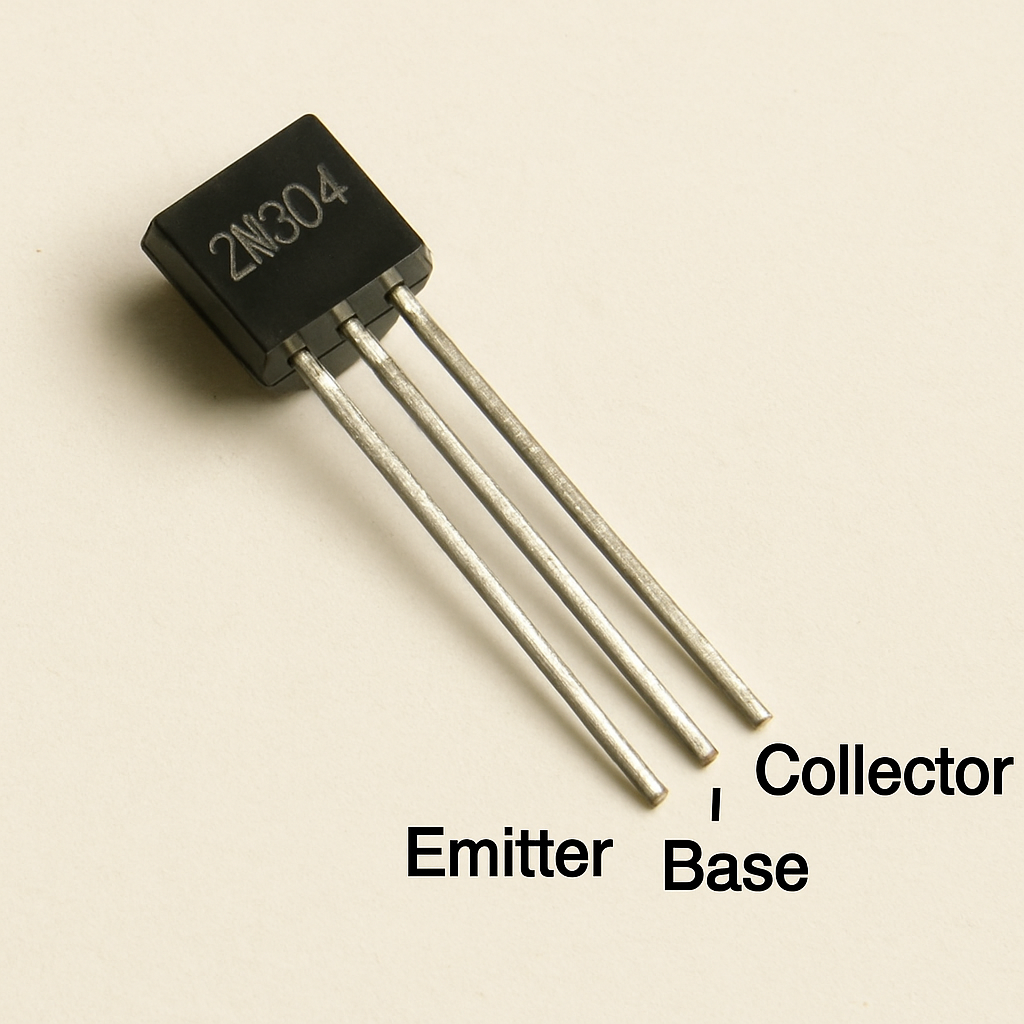
The 2n3904 transistor is a popular NPN bipolar junction transistor used in electronic circuits. It’s renowned for its reliability and efficiency in low-power applications. This transistor is a core component in many educational projects, making it a go-to for students and hobbyists.
One of its key features is its maximum collector current of 200 mA, which is suitable for many small-scale projects. The 2n3904 also features a maximum voltage rating of 40V, allowing it to handle various signal amplification tasks.
The transistor’s design supports high-speed switching, which is crucial in fast electronic circuits. It comes in a TO-92 package, contributing to its widespread use in compact circuit designs.
Key Features of the 2n3904 Transistor:
- Type: NPN BJT
- Package: TO-92
- Maximum Collector Current: 200 mA
- Maximum Voltage: 40V
- Applications: Switching, Amplification
This versatility extends to audio amplifiers and RF circuits, making the 2n3904 indispensable in many fields.
2n3904 Transistor Pinout and Pin Configuration
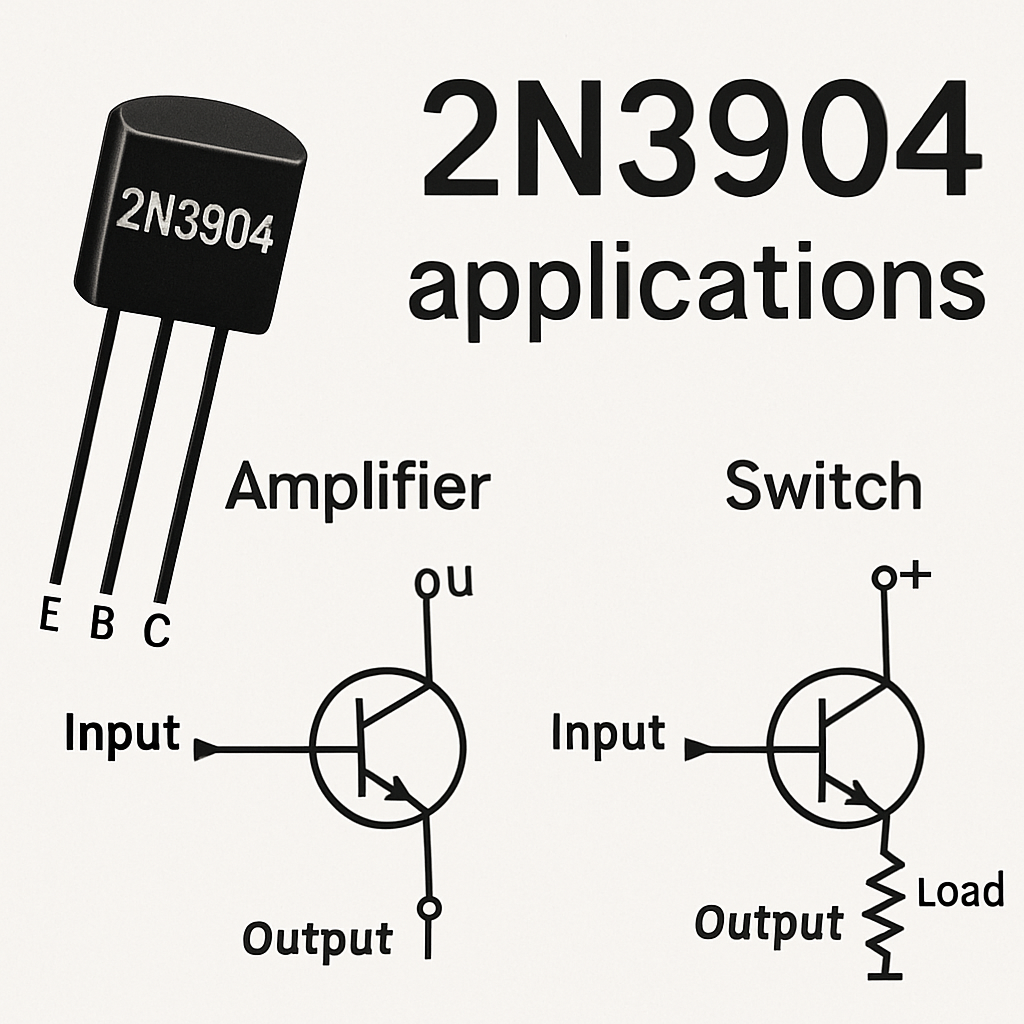
Understanding the pinout of the 2n3904 transistor is essential for effective circuit integration. Its pin configuration helps determine how it connects to other electronic components.
The 2n3904 features three pins: the emitter, base, and collector. This typical configuration is crucial for establishing the right electrical connections. When looking at the flat side of the transistor, the pins are arranged from left to right as emitter (E), base (B), and collector (C).
This arrangement simplifies the process of integrating the transistor into a circuit. It minimizes the chances of wiring errors, which are common in electronic projects.
2n3904 Transistor Pin Configuration:
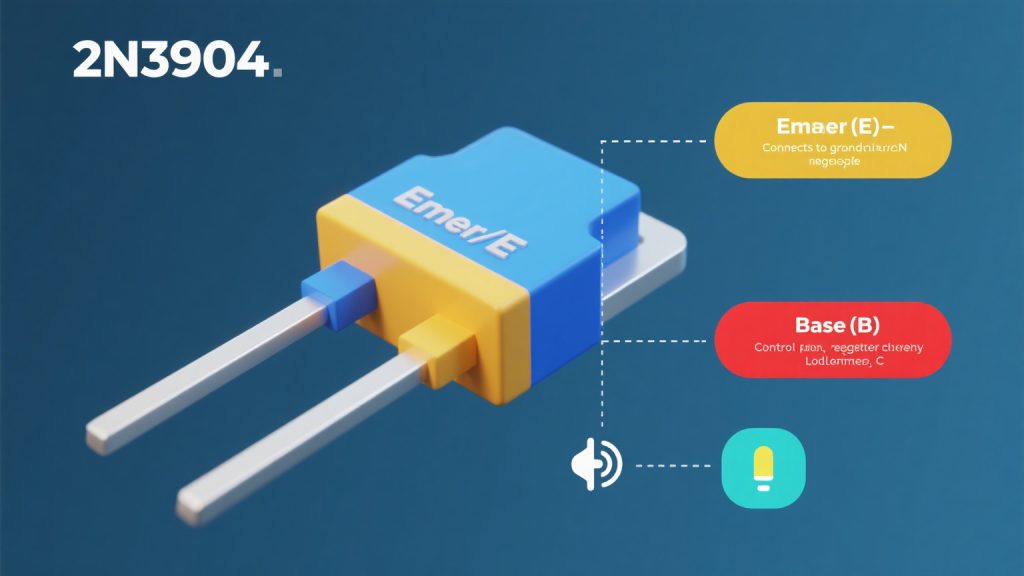
- Emitter (E): Connected to the ground or negative terminal.
- Base (B): Acts as the control pin.
- Collector (C): Connected to the load or positive terminal.
The pin configuration facilitates easy connections with breadboards. It also ensures compatibility with a variety of prototyping platforms, enhancing its versatility.
Moreover, the compact design of the TO-92 package allows the transistor to fit snugly into small spaces. It is a significant advantage in modern, densely-packed electronic circuits.
2n3904 NPN Transistor Datasheet: Key Specifications
The 2n3904 is a popular choice among NPN transistors. It shines due to its reliable electrical characteristics and versatility in various applications.
Detailed datasheets offer valuable insights into these specifications. They include parameters such as maximum voltage ratings and current capabilities.
Key Electrical Specifications:
- Maximum Collector Current (IC): 200 mA
- Maximum Collector-Emitter Voltage (VCEO): 40 V
These specifications make the 2n3904 suitable for low-power applications. Its functionality makes it ideal for signal amplification and switching circuits.
In addition to basic electrical properties, the 2n3904 features high-frequency performance. This quality suits it well for high-speed switching operations.
Additional Specs:
- Gain (hFE) Range: 100 to 300
- Package: TO-92
- Transition Frequency (fT): 300 MHz
The datasheet also highlights thermal characteristics. An understanding of these enhances transistor performance in demanding environments.
Overall, the 2n3904 excels in numerous applications. Its capability to work within tight voltage and current limits is remarkable. The combination of its characteristics contributes to its widespread use in electronic projects.
Electrical Characteristics and Maximum Ratings
Understanding the electrical characteristics of the 2n3904 is essential for selecting the right transistor for your project. Its ability to handle specific voltage and current ensures optimal performance.
Maximum ratings specify the limits the transistor can withstand without damage. It’s crucial to maintain operations within these boundaries to avoid failure.
Maximum Ratings:
- Collector-Base Voltage (VCBO): 60 V
- Emitter-Base Voltage (VEBO): 6 V
- Power Dissipation: 625 mW at 25°C
The transistor’s thermal resistance also affects its performance. Operating it within specified thermal limits ensures longevity and reliability.
The 2n3904 can function efficiently at varying temperatures. It maintains stability despite environmental changes, making it a reliable choice for many applications.
The datasheet provides detailed curves and graphs. These visuals assist in understanding how the transistor behaves under different conditions. By leveraging this data, engineers can design circuits that maximize the potential of the 2n3904.
2n3904 BJT: Working Principle and Internal Structure
The 2n3904 is a Bipolar Junction Transistor (BJT). It operates using electron and hole charge carriers. This dual charge flow enables efficient switching and amplification.
A BJT has three main regions: emitter, base, and collector. The emitter injects charge carriers into the base, controlling the output current in the collector. The narrow base width allows effective carrier recombination and current amplification.
Key Features:
- PN Configuration: Predominantly uses electrons as the charge carriers.
- Current Control: Small base current modulates larger collector-emitter current.
- Amplification: Provides significant gain, enhancing weak signals.
Internally, BJTs like the 2n3904 include junctions formed by semiconductor materials. These junctions establish the pathways for charge movement.
Understanding its internal workings aids in grasping the 2n3904’s role within circuits. This insight informs design choices and optimizes circuit performance.
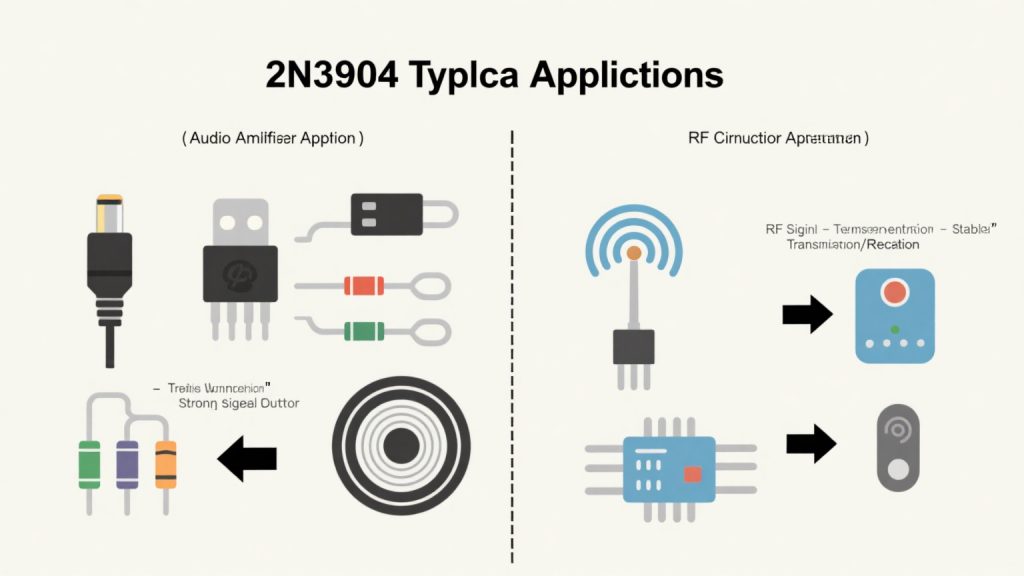
Typical Applications of the 2n3904 Transistor
The 2n3904 transistor’s versatility makes it indispensable in various electronics. Its fast switching speed supports signal amplification tasks and low-power switching.
In the audio realm, it’s often seen in amplifiers. It boosts audio signals effectively, contributing to clear sound output in speaker systems.
Moreover, it’s prominent in RF circuits. Here, its role is crucial in enhancing wireless communication systems, ensuring reliable signal transmission and reception.
Common Uses:
- Audio Amplifiers: Boosting weak audio signals.
- Radio Frequency Circuits: Enhancing communication capabilities.
Other Applications:
- Switching Circuits: Efficient low-power switching control.
- Educational Projects: Widely used due to its simplicity and reliability.
For hobbyists, this component is a favorite in DIY kits. Its ease of use and broad applicability make it ideal for prototyping and learning.
Thus, the 2n3904 transistor remains a staple in electronic labs, bridging practical applications with academic exploration.
How to Use the 2n3904 in Circuits: Examples and Tips
Incorporating the 2n3904 into circuits can enhance projects thanks to its adaptability. For beginners, starting with simple switch circuits is effective. The transistor acts as a current switch, turning loads on or off.
To use it as an amplifier, connect the base to an input signal. This setup amplifies small signals driving larger outputs, beneficial in various audio projects.
Basic Circuit Tips:
Base Resistor: Use a resistor to prevent excess current at the base.
Vary Resistor Values: Experiment with resistor values to optimize performance.
When setting up, ensure proper pin connections. The typical configuration is Emitter (E), Base (B), and Collector (C). Incorrect connections might lead to malfunction or damage.
Additional Tips:
- Check Maximum Ratings: Adhere to voltage and current limits to avoid damage.
- Ensure Proper Heat Dissipation: Use heatsinks if needed to dissipate excess heat.
Appropriately applying these techniques can result in successful circuits. Whether amplifying a signal or controlling a simple motor, the 2n3904 proves invaluable.
These guidelines and examples offer a solid foundation for utilizing the 2n3904 effectively in electronic projects.
2n3904 vs. Similar Transistors (e.g., 2n3906, BC547)
The 2n3904 is often compared with the 2n3906 and BC547. Each serves different roles in circuits. The 2n3904 and 2n3906 belong to the same family but differ in type.
The 2n3904 is an NPN transistor, whereas the 2n3906 is PNP. This distinction affects their applications and how they connect in circuits. Understanding their specific roles is vital for correct usage.
Key Differences:
- 2n3904: NPN type, suitable for positive power supplies.
- 2n3906: PNP type, used with negative voltage applications.
- BC547: Similar but with slightly different voltage ratings.
The BC547 features characteristics akin to the 2n3904 but comes with nuanced differences, such as higher voltage ratings. These variances are important in determining which transistor fits your project needs best.
Sourcing the 2n3904: Electronic Components Distributors
Finding a 2n3904 transistor is quite straightforward due to its popularity. Numerous electronic components distributors stock this versatile piece.
SUNTOP is a notable distributor offering a vast range of electronic components, including the 2n3904. Their inventory is well-suited for both hobbyists and professionals seeking reliable parts.
Notable Distributors:
- SUNTOP
- Mouser Electronics
- Digi-Key Electronics
These distributors provide not just components but also detailed datasheets and technical support. With such resources, sourcing the right transistor becomes a hassle-free task.
Frequently Asked Questions about the 2n3904 Transistor
Many beginners often wonder about the power limitations of the 2n3904 transistor. Understanding its current and voltage limits can prevent circuit failures.
Another common question is about the transistor’s applications in different circuits. Knowing where to use it ensures optimal performance.
Here’s a list of frequently asked questions:
- What is the maximum current capacity?
- Can the 2n3904 be used in audio amplifiers?
- How does the pin configuration work?
- Is it suitable for RF applications?
These queries are crucial for effectively utilizing the 2n3904 transistor in various projects. Addressing these will help in mastering transistor applications.
Conclusion
The 2n3904 transistor is a fundamental part of many electronic circuits. Its versatility and reliability make it a favorite among hobbyists and professionals alike.
Understanding its specifications and potential uses helps in optimizing circuit designs. This NPN transistor serves as a cornerstone in various applications from audio amplifiers to RF circuits.
By mastering the 2n3904, you’ll enhance your electronic projects significantly. Whether for educational purposes or practical implementations, it stands as a vital component in modern electronics.
SHARE: