

Active Components VS Passive Components

by Suntop
2025-12-25
What Are Circuit Components?
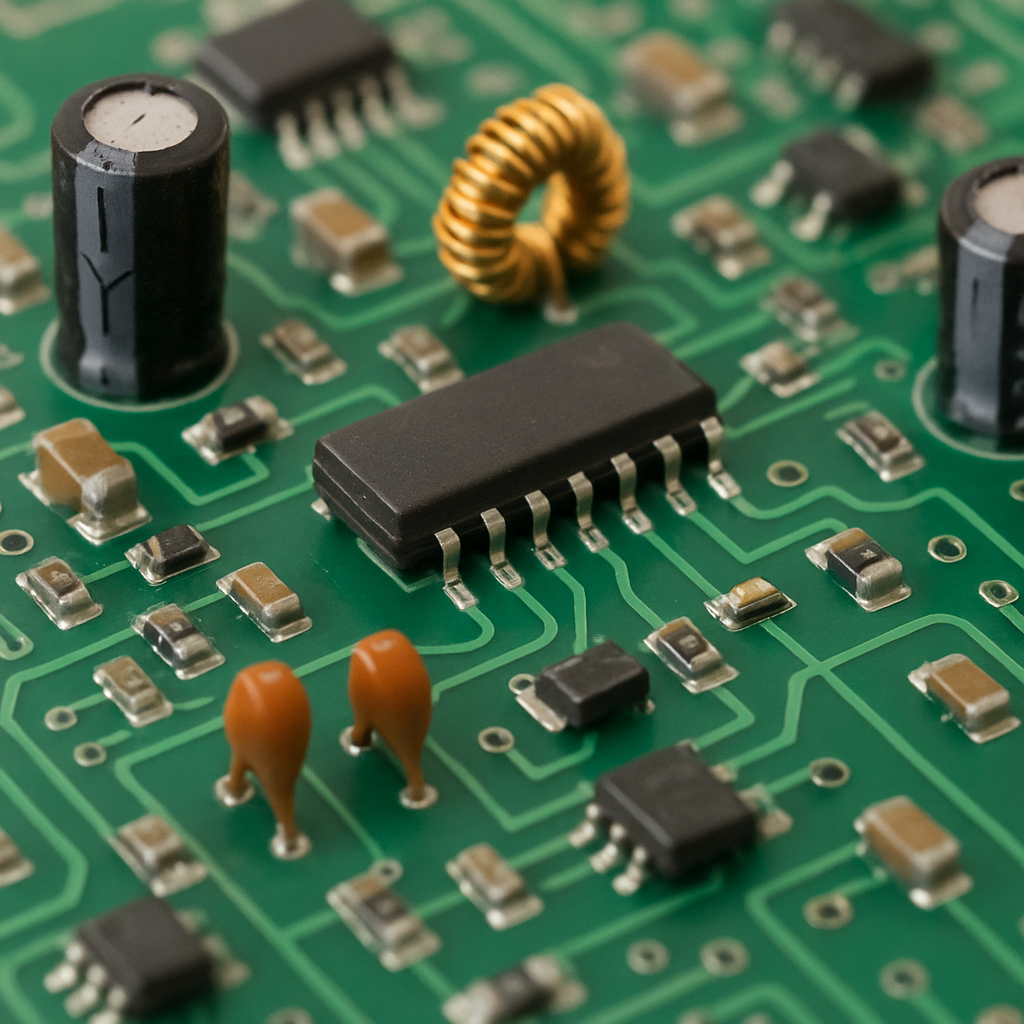
Before we delve into active and passive components, let’s briefly discuss what circuit components are. Circuit components are the building blocks of electronic circuits. They allow us to control current and voltage to achieve desired functions, such as amplification, oscillation, or filtering of signals. These components come in various forms, each serving a unique purpose within the circuit. Understanding these components is akin to understanding the vocabulary of a new language; it forms the basis for creating and deciphering complex electronic systems.
At their core, circuit components can be categorized based on their functionality and interaction with electrical energy. Some components are designed to regulate power, while others are intended to store or dissipate energy. Each component is critical for ensuring that a circuit operates smoothly, reliably, and efficiently. As technology advances, these components continually evolve, offering more capabilities and efficiencies, which further expands the possibilities for circuit design and application.
Active Components
Active components are elements in a circuit that can control the flow of electricity. They have the ability to amplify signals, switch current, or produce energy. This is because they have a power gain and can introduce energy into the circuit from an external source, such as a battery or power supply. Active components are fundamental to the operation of modern electronic devices, from the simplest gadgets to the most complex systems.
These components are crucial in applications where signal manipulation and energy transfer are necessary. For example, in communication devices, active components boost signal strength to ensure clear transmission over long distances. They also play a vital role in computing, where they enable logic operations and data processing. The versatility of active components makes them indispensable in various fields, including telecommunications, computing, and consumer electronics.
Key Characteristics of Active Components
- Power Gain: Active components can increase the power of a signal, making them essential for amplification. This characteristic is pivotal in audio equipment, where amplifiers enhance sound quality and volume, and in broadcasting, where signals are strengthened for widespread dissemination.
- Energy Source: They require an external power source to operate. This necessity for external energy allows active components to perform tasks that passive components cannot, such as signal generation and modulation, which are essential in devices like oscillators and transmitters.
- Control: These components can control the flow of electricity, allowing for more complex circuit functions. This control enables the creation of intricate circuits that perform multiple operations simultaneously, crucial in devices like smartphones and computers.
Examples of Active Components
- Transistors: Used for amplification and switching, transistors are fundamental to modern electronics. They are the building blocks of integrated circuits and are used in everything from simple switches to complex microprocessors.
- Integrated Circuits (ICs): These are complex circuits with multiple active components, used in computers and smartphones. ICs have revolutionized electronics by miniaturizing and combining numerous functions into a single chip, drastically reducing size and power consumption.
- Diodes: While primarily used to allow current to flow in one direction, certain diodes like LEDs also emit light, showcasing their active nature. Diodes are also crucial in power conversion and signal modulation applications.
Passive Components
In contrast to active components, passive components cannot control current by themselves and do not introduce energy into the circuit. Instead, they consume or store energy. They are essential for maintaining the desired function of the circuit by providing resistance, capacitance, or inductance. Passive components are the unsung heroes of electronics, ensuring circuits remain stable and reliable.
These components are crucial in applications where energy conservation and signal conditioning are necessary. For instance, in power management systems, passive components regulate voltage and current flow, ensuring devices operate within safe parameters. They also play a significant role in signal processing, where they filter noise and stabilize frequencies, ensuring the integrity of transmitted signals. Their ability to perform these functions without requiring a power source makes them invaluable in a wide range of electronic applications.
Key Characteristics of Passive Components
- No Power Gain: Passive components do not amplify signals. This lack of amplification means they are often used in roles where signal integrity and stability are more important than signal strength, such as in filtering applications.
- Energy Consumption: They only consume or store energy, without the need for an external power source. This characteristic makes them ideal for applications where energy efficiency is crucial, such as in battery-powered devices.
- Stability: These components help stabilize the circuit and ensure it functions correctly. By maintaining consistent voltage and current levels, passive components prevent fluctuations that could lead to circuit failure or malfunction.
Examples of Passive Components
- Resistors: These components provide resistance to the flow of current, helping to control voltage and current levels. Resistors are used in virtually every electronic device, regulating signal levels and dividing voltages.
- Capacitors: Used to store and release energy, capacitors are crucial for filtering and timing applications. They are widely used in power supply systems to smooth out voltage fluctuations and in timing circuits to control the operation of electronic devices.
- Inductors: These store energy in a magnetic field when electrical current passes through them, often used in filtering and tuning. Inductors are key in applications such as transformers and motors, where they help manage energy transfer and reduce electrical noise.
Comparing Active and Passive Components
Now that we have a basic understanding of what active and passive components are, let’s compare them directly. This comparison will highlight their complementary roles in electronic circuits and underscore the importance of understanding both types when designing and troubleshooting electronic systems.
Energy and Power
Active components require an external energy source to function and can provide power gain, whereas passive components do not require an external source and can only consume or store energy. This fundamental difference dictates their roles in a circuit, with active components driving processes and passive components supporting those processes through energy management and signal conditioning.
Functionality
Active components can amplify signals and control current, making them vital for creating complex circuits like amplifiers and oscillators. Passive components, on the other hand, are used for simpler functions like filtering, dividing voltage, and storing energy. The interplay between these functionalities allows for the creation of sophisticated electronic systems, where active components handle signal manipulation and passive components ensure stability and efficiency.
Complexity
Typically, active components are more complex and can perform a wider range of functions compared to passive components. Integrated circuits, which are active components, can contain thousands of transistors, resistors, and capacitors, all working together to perform a specific task. This complexity allows for the miniaturization and increased capability of electronic devices, enabling advancements in technology and consumer electronics.
Practical Applications in Circuits
Amplification and Signal Control
Active components are indispensable in applications requiring signal amplification and control. For instance, in audio systems, transistors amplify sound signals to drive speakers. Similarly, in radio systems, they amplify weak signals received by the antenna. This amplification ensures that signals are strong enough to be processed and transmitted effectively, enhancing communication and entertainment experiences.
Energy Storage and Filtering
Passive components are crucial in applications like power supplies, where capacitors smooth out fluctuations in voltage. Inductors are used in radio frequency applications to filter signals and eliminate interference. These components ensure that electronic systems operate smoothly and efficiently, minimizing the risk of signal distortion and power loss.
Stability and Safety
Both active and passive components play roles in stabilizing circuits. Resistors limit current to prevent damage to other components, while diodes in rectifiers ensure current flows in the correct direction, protecting the circuit from potential harm. By maintaining stability and safety, these components extend the lifespan of electronic devices and enhance their reliability.
Conclusion
Understanding the differences between active and passive components is vital for anyone working in electronics. Active components, with their ability to amplify and control signals, are essential for complex circuit designs. In contrast, passive components provide the necessary support by storing and consuming energy, stabilizing circuits, and ensuring safety. Both types of components are integral to the functionality and reliability of electronic systems.
Whether you’re designing a simple circuit or a complex electronic system, recognizing the roles of active and passive components will help you build more effective and reliable circuits. As technology continues to evolve, mastering these fundamentals will keep you equipped to tackle new challenges in the field of electronics. By grasping these concepts, you’ll be well-prepared to innovate and excel in an increasingly interconnected and technologically advanced world.
SUNTOP
Founded in 2000, Suntop is one of the leading global distributors of electronic components, dedica ted to providing comprehensive procurement and supply chain services to the global electronics manufacturing industry. Our services include distribution, spot trading, PPV cost-saving projects, and inventory management. We not only offer high-quality products but also strive to assist our clients in achieving optimal solutions with minimal time and cost.
Suntop is a popular choice for those seeking electron devices and circuits due to their competitive pricing and reliable service. They cater to both small-scale hobbyists and large-scale manufacturers, ensuring that every customer finds what they need.

SHARE: